The Human Counter-Revolution: Why Algorithms Cannot Replace the “Guild Identity”
We have entered an era obsessed with optimization, predictive analytics, and automated workflows.
Leaders allocate significant capital to replace human intuition with algorithmic precision, chasing a mechanical ideal of efficiency. But an enterprise stripped of its human soul is not a scaled asset; it is a beautifully engineered ghost ship.
When we examine the institutions that survived centuries of economic and social disruption—from medieval artisan guilds to early trading communities—their resilience never stemmed from physical infrastructure. It emerged from an invisible architecture of shared identity, mutual recognition, and voluntary commitment.
As I explore in my newly published work, The Human Future of Business, the most dangerous myth in modern boardrooms remains the assumption that people are merely inputs to be scheduled, monitored, and replaced.
They are not. They are the source.
The Source, Not the Resource
The terminology of “Human Resources” is a direct inheritance from twentieth-century industrial assembly lines, where labor was managed alongside coal, timber, and steel. Yet true value in the knowledge economy operates on entirely different principles.
Work is not a transactional exchange of hours for currency. It is the primary arena where professional identity is constructed. Individuals join organizations seeking validation, intellectual community, and an answer to a fundamental question: “Who am I becoming through my work?”
When leadership recognizes this, the entire operating model shifts. You can license software, purchase manufacturing equipment, or acquire data infrastructure. You cannot own human potential.
Human capability leaves the building every evening. Its continued contribution depends entirely on voluntary engagement, psychological safety, and trust. The medieval guild system survived not through rigid control, but through shared ethical standards, collective purpose, and the recognition that mastery requires community.
“Machines process data with extraordinary speed, but they do not possess imagination, moral reasoning, or emotional understanding. People are not resources to be managed; they are the sole creators of all other resources.”
— Pavel Hrejsemnou
The Algorithmic Trap
The current push toward algorithmic management often mistakes visibility for productivity.
I recently consulted with a mid-market technology firm that replaced middle-management coaching with automated performance tracking and predictive task allocation. Within two quarters, output metrics appeared stable, but cross-functional collaboration collapsed, voluntary innovation dropped by forty percent, and two of their strongest engineering leads resigned.
The system was tracking activity, but it was starving engagement. The problem was not the technology. It was the assumption that human motivation could be optimized like a supply chain.
Sustainable performance does not emerge from surveillance. It emerges from environments where individuals feel trusted to apply their judgment, recognized for their contributions, and connected to a purpose that extends beyond quarterly targets.
The Human-Centric Diagnostic
To protect your enterprise from strategic burnout and cultural erosion, audit your operating model against these three foundational principles:
- The Language Shift: Does your internal communication treat individuals as headcount and operational inputs, or as strategic multipliers whose development directly impacts organizational capability? Terminology shapes behavior.
- The Trust Currency: Are your systems designed around compliance and monitoring, or are they structured to cultivate psychological safety where talent chooses to stay, experiment, and lead? Trust is not a soft metric. It is the operational infrastructure of knowledge work.
- The Meaning Anchor: Have you connected daily tactical execution to a broader narrative that gives employees a sense of contribution beyond financial output? Purpose is the only force that sustains performance when market conditions turn volatile.
Technology spreads rapidly. Products are replicated overnight. A living culture built around exceptional minds working toward shared objectives cannot be copied.
Deepening the Conversation
The frameworks discussed in this issue are examined in greater depth across my published work on organizational evolution and human-centered leadership. I reference them only if they align with the cultural and strategic challenges your leadership team is currently navigating:
- For a comprehensive exploration of the shift from industrial management to human potential development, “The Human Future of Business” provides the strategic and philosophical blueprint for modern executives.
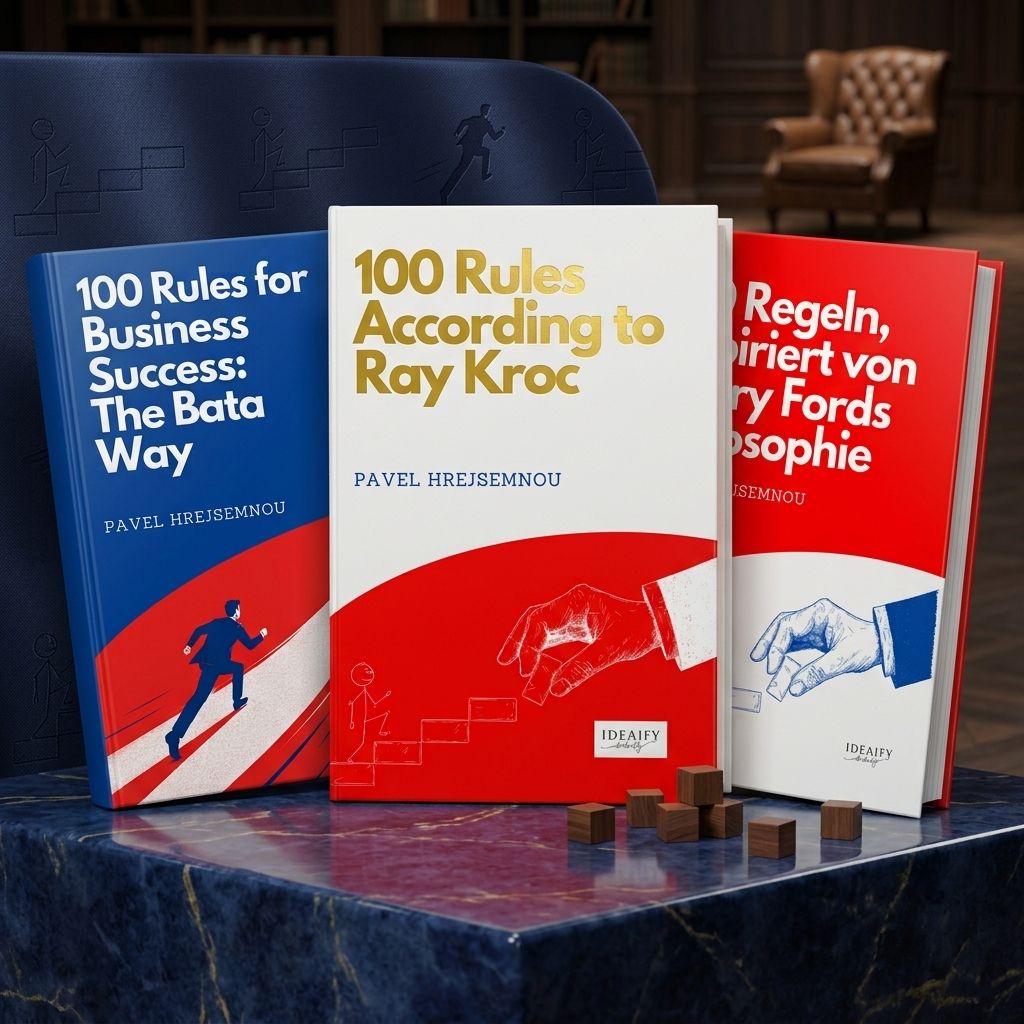
- For systematic operational principles grounded in historical practice, the industrial trilogy—“100 Rules: Empire Builders” (Baťa, Ford, Kroc)—offers time-tested methodologies for scaling without losing human alignment.
- For practical diagnostic execution in digital environments, my guide on structural visibility addresses modern market challenges.
All resources are available through major global distributors or directly via my shop.
🛠️ Protect Your Organizational Culture
Stop managing inputs. Start developing potential.
👉 Request the Free Human-Centric Diagnostic Template for your leadership team via email.
👉 Equip Your Management Tier with the Empire Builders Team License. Give your leaders the frameworks to build trust, not just track metrics.
I would value your perspective: Where do you see the greatest tension in your organization today—between algorithmic efficiency and human judgment, or between short-term metrics and long-term cultural health? Share your observations in the comments below.
Until next issue, build systems that outlive your presence.
— Pavel Hrejsemnou
Business Author & Strategist