The Founder’s Trap: Why the Habits That Built Your First Million Are Destroying Your Next Ten
Congratulations. You built something real. Through sheer grit, relentless hustle, and an obsessive attention to detail, you took an idea and turned it into a thriving business.
But here is the uncomfortable truth that no one tells you at the celebration dinner: the exact same habits that got you here are now the primary bottleneck preventing you from scaling.
Welcome to the Founder’s Trap.
The Hero vs. The Architect
In the early days, you were the Hero. You closed the impossible deal. You fixed the broken code at 2 AM. You personally onboarded the first ten clients. Your direct involvement was the company’s greatest competitive advantage.
But as the organization grows, the rules change. The company no longer needs a Hero; it needs an Architect.
Yet, most founders resist this transition. They mistake micromanagement for “quality control.” They view delegation as “lowering standards.” They hoard key client relationships because “no one else can explain it like I can.”
The result? The founder becomes exhausted, the leadership team becomes disempowered, and the company’s growth plateaus.
The Historical Parallel: Baťa’s Masterstroke
Tomáš Baťa understood this trap better than anyone. As his shoe empire expanded rapidly in the 1920s, he could have easily remained the ultimate micromanager. Instead, he did something radical: he deliberately made himself less essential to the daily operations.
He implemented the Autonomous Workshop System. He divided the factory into small, independent units, each with its own leader who was responsible for its own profit and loss. Baťa didn’t tell them how to make every shoe; he gave them the system, the transparency, and the accountability, and then he stepped back.
He transitioned from being the Chief Hero to the Chief Architect. And in doing so, he built a company that could scale globally without his constant physical presence.
The 3 Symptoms of the Founder’s Trap
Audit your own behavior. Are you exhibiting these warning signs?
- The “Just One More Thing” Syndrome: You find yourself constantly stepping in to “fix” your team’s work, ensuring it meets your personal standard, rather than coaching them to reach that standard themselves.
- Relationship Hoarding: You are still the primary point of contact for your top 20% of clients or partners, creating a single point of failure that terrifies your board and limits your company’s valuation.
- Systemic Skepticism: You dismiss formal processes, documentation, or middle management as “bureaucracy,” preferring the chaotic speed of ad-hoc decisions, which ultimately slows down the entire organization.
The Transition Diagnostic
To break free from the trap, you must intentionally design your own obsolescence in daily operations. Ask yourself these three questions:
- The Vacation Test: If you disappeared for 30 days with no phone access, would the company maintain its momentum, or would it grind to a halt?
- The Decision Test: What percentage of decisions made in your company this week required your explicit approval? (If it’s over 20%, you are the bottleneck).
- The Legacy Test: Are you building a business that relies on your continuous presence, or are you building an institution that can outlive you?
Deepening the Conversation
Transitioning from Hero to Architect is not a natural evolution; it is a deliberate, often painful, psychological shift. It requires letting go of the very identity that made you successful in the first place.
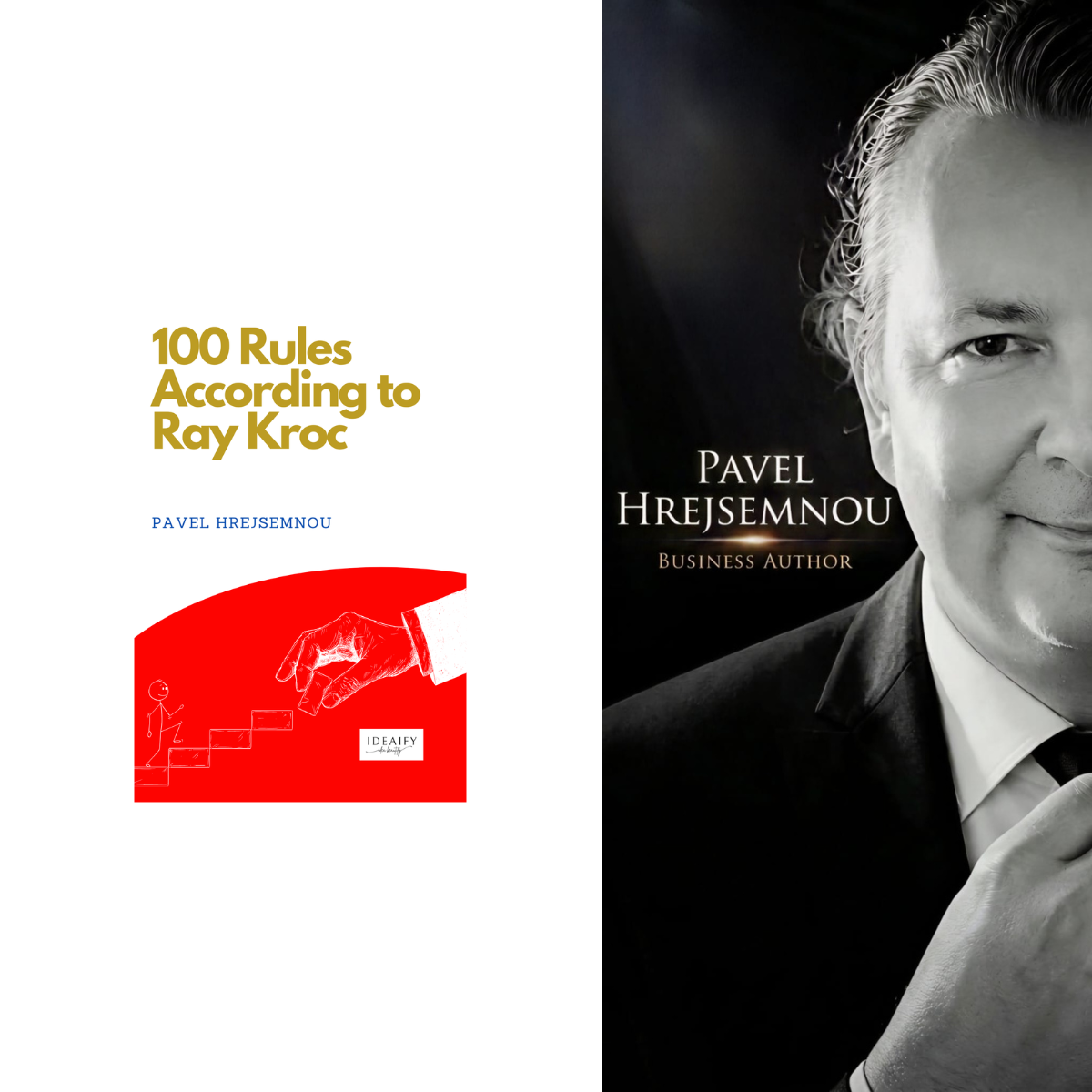
The frameworks for making this shift are codified in my work on systemic leadership. For a deep dive into how history’s greatest builders designed organizations that scaled without them, explore The 100 Rules: Empire Builders trilogy (Baťa, Ford, Kroc).
🛠️ Step Back to Scale Up
Stop being the bottleneck. Start building the architecture.
👉 Request the Free Founder’s Transition Diagnostic to evaluate your current operational dependencies.
👉 Equip Your Leadership Team with the Empire Builders Team License. Give your managers the frameworks to take true ownership, so you can finally focus on the future.
I would value your perspective: What is the hardest habit for you to let go of as your company has grown? Share your observations in the comments below.
Until next issue, build systems, not dependencies.
— Pavel Hrejsemnou
Business Author & Strategist