The Architecture of Resilience: Why You Must Build on “Swamps” to Build for Centuries
Every leader dreams of building their enterprise on solid rock. It is the ultimate fantasy: a stable market, predictable growth, and a frictionless path to scale.
But rock is scarce. And in the modern economy, it is an illusion.
The true test of leadership is not how well you build when conditions are perfect. The true test is whether you can build a cathedral on a swamp. History’s most enduring enterprises were not built by avoiding difficult terrain; they were built by engineering foundations so deep and resilient that the instability of the surface no longer mattered.
The Illusion of Easy Ground
Modern business culture worships speed. We are taught to “move fast and break things,” to scale on venture capital, and to optimize for quarterly metrics. This is the equivalent of building a wooden shack on a sandbar. It looks impressive in the short term, but the first storm will wash it away.
When leaders choose the “easy ground”—ignoring cultural debt, relying on a single charismatic founder, or scaling sales without fixing operational friction—they are not building an enterprise. They are building a vulnerability.
The Oak Pile Principle
In the late 13th century, builders in Sedlec, Bohemia, faced an impossible task: construct a massive Gothic cathedral on soft, waterlogged marshland. The solution was not to find a new location. The solution was the Oak Pile Principle.
They drove thousands of massive oak trunks deep into the swamp. Deprived of oxygen under the mud, the wood did not rot; it petrified, becoming harder than stone. On top of this hidden, unglamorous, and grueling foundation, they built a structure that has stood for over 700 years.
Your business requires the same hidden foundation.
Tomáš Baťa did not build an empire by focusing on the shiny facade of his stores. He built it by obsessing over the “oak piles”: decentralized accounting, radical transparency, and a culture where every worker thought like an owner. Henry Ford did not just build a car; he drove the “piles” of standardized, frictionless workflows deep into the bedrock of his operations.
Resilience is not a visible trait. It is the hidden architecture that holds the weight when the market floods.
The Foundation Audit for Leaders
If you want to know whether you are building a shack on sand or a cathedral on petrified wood, audit your organization against these three questions:
- The Surface vs. Depth Test: Are you spending 80% of your time optimizing the visible “facade” (marketing, superficial perks) or the hidden foundation (operational systems, leadership development, cash flow discipline)?
- The Single Point of Failure Test: If your most critical “load-bearing” person (often the founder or a top rainmaker) stepped away for six months, would the structure hold, or would it collapse into the swamp?
- The Cultural Petrification Test: Under the pressure of rapid growth, has your company culture hardened into a resilient, principled force (like the oak piles), or has it rotted from the inside due to compromised values and unchecked egos?
Deepening the Conversation
The leaders who survive decades of disruption are those who respect the swamp. They do not fear the hard, unglamorous work of laying deep foundations.
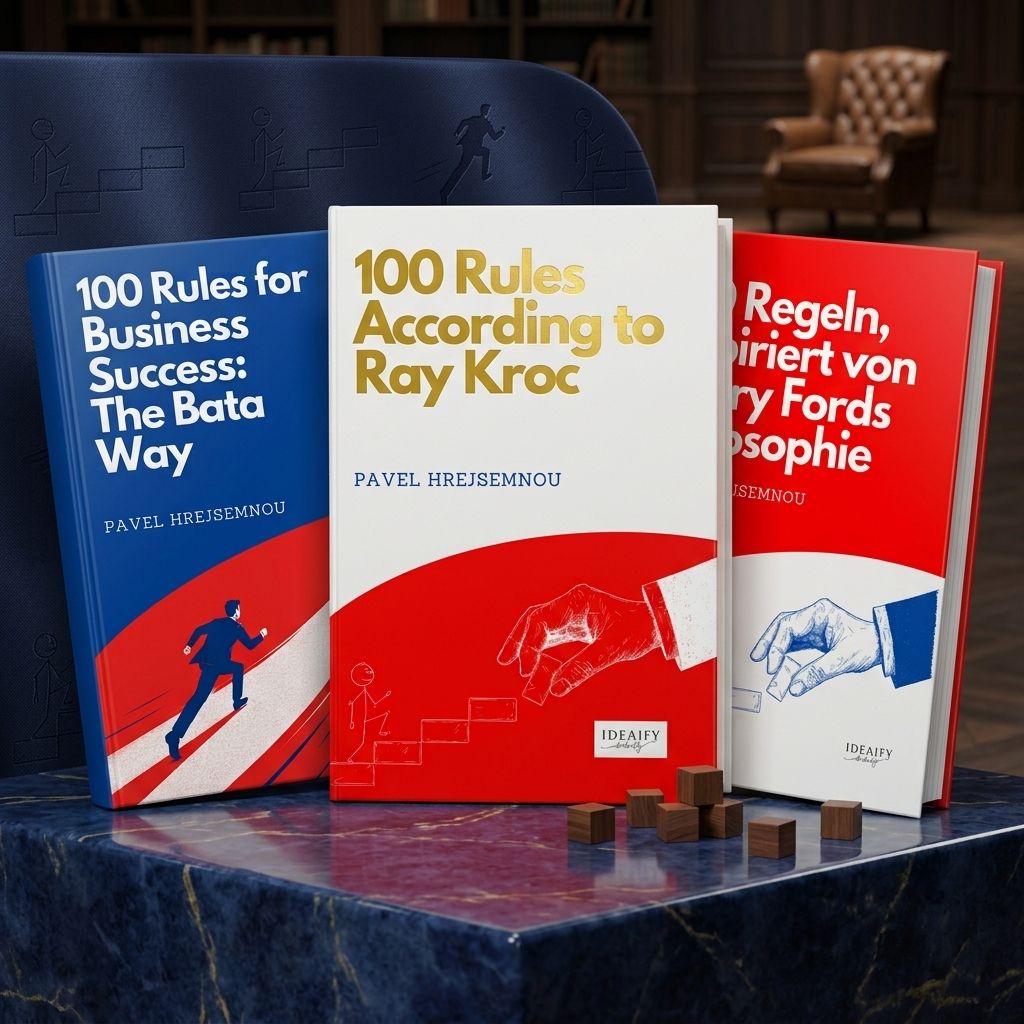
If you are ready to stop building on sand and start engineering an enterprise that outlives you, the frameworks are available. For a systematic breakdown of how history’s greatest builders engineered resilience, explore The 100 Rules: Empire Builders trilogy.
🛠️ Engineer Your Foundation
Stop building for the next quarter. Start building for the next century.
👉 Request the Free Foundation Audit Diagnostic for your leadership team via email.
👉 Equip Your Management Tier with the Empire Builders Team License. Give your leaders the exact blueprints to drive the oak piles deep into your organization.
I would value your perspective: What is the most “unglamorous” foundational work your team is doing right now that will pay off in ten years? Share your observations in the comments below.
Until next issue, build deep.
— Pavel Hrejsemnou
Business Author & Strategist