Table of contents
Share Post
Your Mediocrity is an Insult to the 4,096 People Who Died So You Could Exist
Let’s play a numbers game that will change how you see your life, your business, and your legacy.
Two parents. Four grandparents. Eight great-grandparents.
Keep going back—just 12 generations, roughly 400 years into the past.
The math doesn’t lie: 4,096 individuals.
Four thousand and ninety-six flesh-and-blood human beings had to survive. They had to endure wars you learned about in textbooks, plagues you saw in movies, famines you can’t imagine, economic collapses, and brutal, backbreaking labor every single day of their lives.
They had to find each other. They had to choose each other. They had to reproduce, often while starving, often while grieving, often while running for their lives.
Every single one of those 4,096 people made it through hell so that you could sit here, reading this sentence, right now.
The Question Nobody Wants to Answer
So here it is—the question that will either ignite you or haunt you:
What the hell are you doing with that gift?
Are you building a “side hustle” that will vanish in 18 months?
Are you optimizing for comfort instead of impact?
Are you building a company that will collapse the moment you take a vacation?
Are you settling for mediocrity because “that’s realistic”?
If the answer is yes, then you are spitting on the graves of 4,096 warriors who survived the unimaginable so you could exist.
They didn’t survive the Black Death, the World Wars, the Great Depression, and countless personal tragedies so you could be average.
They survived so you could build an empire.
History is Not a Museum. It’s a Weapon.
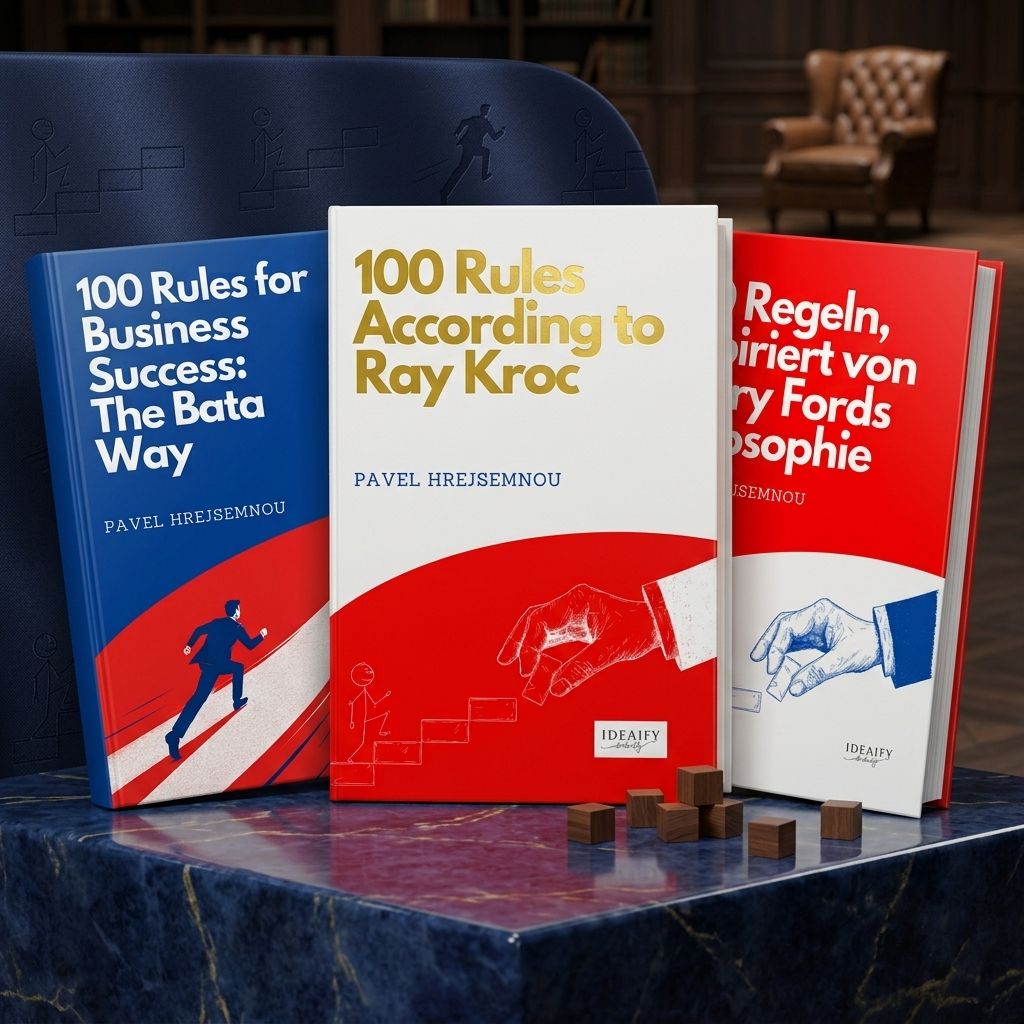
Most business “gurus” treat history like a dusty museum exhibit. They quote Tomáš Baťa, Henry Ford, and Ray Kroc as if they were harmless motivational posters.
We don’t do that here. We treat history as a tactical weapon for the 21st century.
When you study the true empire builders, you realize they weren’t just lucky entrepreneurs. They were the ultimate culmination of generational resilience. They understood a fundamental truth that modern startup culture has completely forgotten:
You are not building for yourself. You are building a system that must outlive you.
Let’s look at three masters who understood this—and how they weaponized generational thinking:
1. Tomáš Baťa: “We Don’t Make Shoes. We Make People.”
Tomáš Baťa didn’t just build a shoe company in Zlín, Czechoslovakia. He built a self-sustaining civilization.
Housing. Schools. Employee ownership. Global expansion. Profit-sharing before it was trendy.
While other industrialists were exploiting workers, Baťa was building humans who could build more humans who could build more systems.
His philosophy was radical then and remains radical now: The system matters more than the founder.
Baťa died in a plane crash in 1932. The company didn’t just survive—it grew, adapted, and still exists today.
Why? Because Baťa wasn’t building a business. He was building a legacy machine.
Ask yourself: If you died tomorrow, would your business survive 100 years? Or would it collapse in 100 days?
2. Henry Ford: “Coming Together is a Beginning. Keeping Together is Progress. Working Together is Success.”
Henry Ford didn’t just invent the assembly line. He weaponized efficiency and turned manufacturing into a moral crusade against waste.
Ford looked at the chaotic, artisanal world of early 20th-century production and saw a profound disrespect for human effort. Every wasted motion, every unnecessary step, every poorly designed process was an insult to the worker’s time and dignity.
His solution? Systematize genius so that ordinary people could achieve extraordinary output.
Ford didn’t need brilliant craftsmen. He needed a system so robust that anyone—regardless of background, education, or skill—could contribute to something magnificent.
The result? The Model T. The $5 workday. The modern middle class.
Ford didn’t build cars. He built a system that changed human civilization.
Ask yourself: Are you building a system that amplifies ordinary people? Or are you building a cult of personality around yourself?
3. Ray Kroc: “If You Have Time to Do It Wrong, You Have Time to Do It Over Properly.”
Ray Kroc didn’t invent the hamburger. The McDonald brothers did.
Kroc invented something far more valuable: the system that conquered the world.
When Kroc walked into that San Bernardino burger stand in 1954, he didn’t see a restaurant. He saw a machine—a perfectly optimized, repeatable, scalable system that could be cloned in Tokyo, Paris, Moscow, and Johannesburg.
His obsession wasn’t with burgers. It was with standardization.
Every fry cooked the same way. Every burger assembled identically. Every customer treated with the same process, whether in Los Angeles or Prague.
Why? Because Kroc understood that true empire building isn’t about control—it’s about creating a machine so robust that it replicates perfection without you.
Today, McDonald’s serves 69 million people every single day in over 100 countries.
Ray Kroc died in 1984. The empire he built is just getting started.
Ask yourself: Are you building a job that requires your presence? Or are you building a system that thrives in your absence?
The Modern Disease: Exit Strategy Obsession
Modern business culture is infected with a deadly virus: “Exit strategy” thinking.
Build fast. Scale fast. Sell to private equity. Cash out. Retire at 35. Buy a yacht. Forget.
That’s not empire building. That’s looting.
Real builders don’t plan exits. They plan legacies.
When you build with exit strategy thinking, you optimize for short-term metrics that look good in a pitch deck. You cut corners. You burn out employees. You sacrifice long-term sustainability for short-term valuation.
But when you build with legacy thinking, everything changes:
- You hire for culture fit, not just skills.
- You invest in systems, not just sales.
- You measure success in decades, not quarters.
- You ask: “Will this decision make my great-grandchildren proud?”
The 4,096 Ancestor Challenge
Here’s your challenge—the same challenge that Baťa, Ford, and Kroc answered:
Look at your business, your career, your life through the eyes of your 4,096 ancestors.
They survived the unimaginable. They endured what you cannot fathom. They passed the torch to you.
Are you honoring their sacrifice?
Or are you wasting it on mediocrity?
Stop Guessing. Start Systematizing.
You don’t have to reinvent the wheel. The blueprints for scalable, resilient, and dominant business systems have already been written—in blood, sweat, and steel—by those who came before us.
Your 4,096 ancestors did their part. They survived.
Now, it’s your turn to build.
The question is: Will you?
Your empire awaits. The only thing standing between you and it is your willingness to stop playing small.
📚 Continue Your Empire-Building Journey
These principles aren’t theory. They’re battle-tested systems from history’s greatest builders, decoded and translated for the 21st century.
Pavel Hrejsemnou is a strategic mentor and author of 100+ books. He decodes the brutal, effective, and timeless systems of history’s greatest builders and translates them into actionable manuals for modern leaders. Zero fluff. Pure mastery. Based in Kutná Hora, Czech Republic, serving empire builders from Tokyo to Los Angeles.