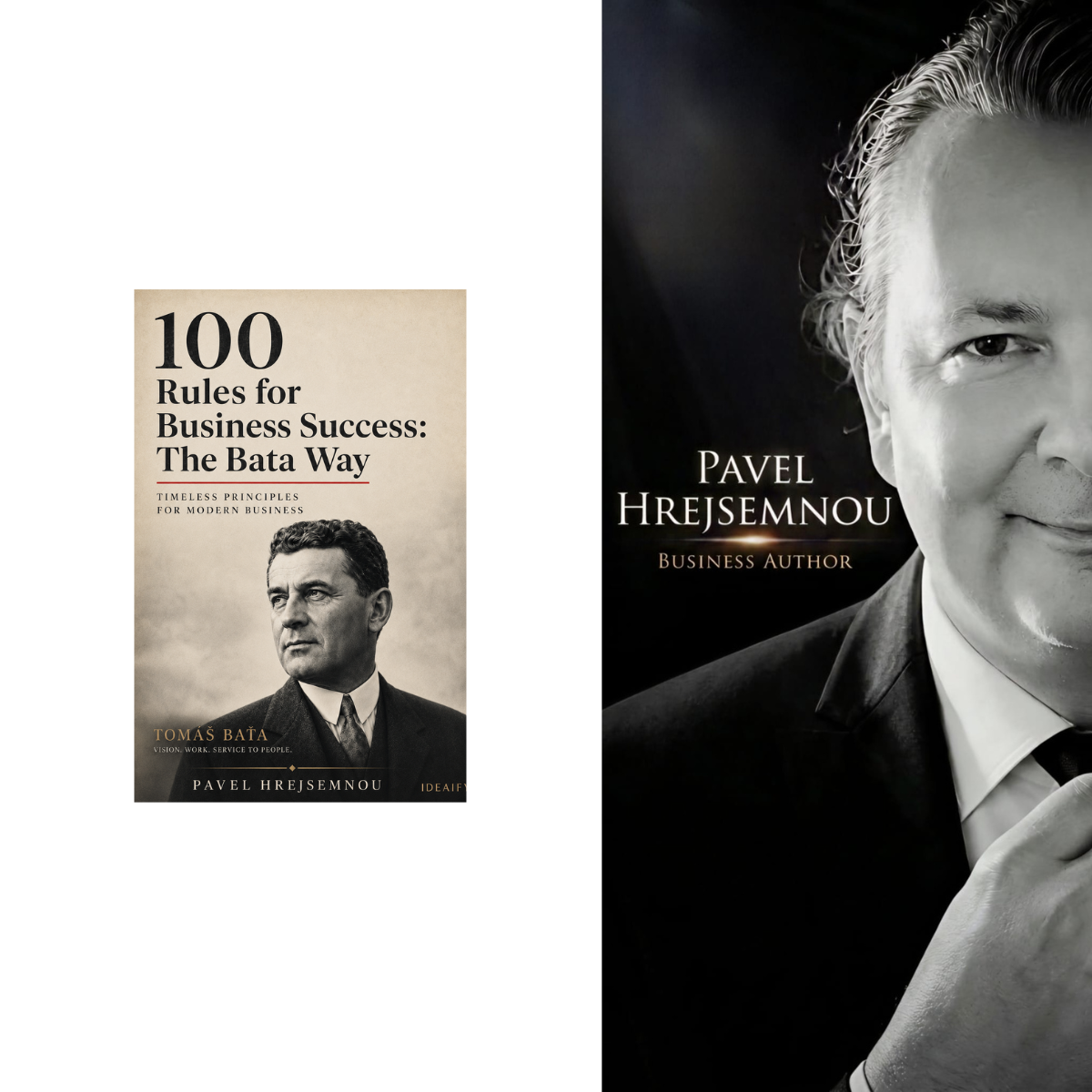
“The system must work even if I am not here. If it depends on me, it is not a system, it is a dictatorship of one.” — The spirit of Tomáš Baťa
On July 12, 1932, Tomáš Baťa, the visionary founder of the global shoe empire, died in a plane crash. He was 55 years old, at the absolute peak of his powers, and his company was expanding across the globe. The business world held its breath, expecting the sudden collapse of an empire built entirely on the genius and relentless drive of one man.
It didn’t collapse. In fact, it grew exponentially in the decades that followed.
Why? Because Baťa didn’t build a company dependent on his charisma. He built an institution. And in doing so, he exposed the greatest trap in modern business: The Founder’s Ego.
The Modern “Founder’s Trap”
Today, we worship the charismatic CEO. We put them on magazine covers, we hang on their every tweet, and we build corporate cultures entirely around their personality. But this is a fatal flaw in long-term strategy.
When a company is built around the ego, the intuition, and the personal network of its founder, it becomes a house of cards. If the founder gets sick, loses interest, or makes a single catastrophic error in judgment, the entire organization trembles. This is the “Founder’s Trap”: building a business that cannot survive its creator.
As a CEO or Founder, you must ask yourself a brutal question: If I were to step away tomorrow, would my company thrive, or would it slowly suffocate without my daily intervention?
The Baťa Solution: The System as the True CEO
Long before his death, Baťa was obsessed with decentralization. He created the famous “autonomous workshops”—small, self-managing units that operated like independent businesses within the larger empire. He didn’t want employees who waited for his orders; he wanted “intrapreneurs” who understood the system.
Baťa’s genius wasn’t that he was the smartest person in the room. His genius was that he built a system of decision-making that didn’t require him to be in the room. He transferred his own operational logic into the DNA of the company. He didn’t build a cult of personality; he built a cult of process.
The Antidote: The Interface Audit
How do you transition from a personality-driven startup to an institution-driven empire? You must ruthlessly audit the interfaces between your ego and the organization’s operations.
An Interface Audit for founders is a strategic intervention designed to identify where the company is bottlenecked by your personal involvement. It forces you to confront uncomfortable truths:
- Are key decisions stalled because they require your personal approval?
- Is your corporate culture based on “what the boss likes” rather than objective, documented values?
- Have you hired “yes-men” who execute your whims, rather than systemic thinkers who can challenge and improve the process?
When you clear these interfaces, you stop being the chief bottleneck of your own company. You replace your personal intuition with institutional intelligence. You build a framework where excellence is the standard, regardless of who is sitting in the CEO’s chair.
Build an Institution, Not a Monument to Yourself
The ultimate test of an Empire Builder is not how high they can climb, but how well the structure stands after they are gone. True legacy isn’t about having your name on the building; it’s about embedding your principles into a system that generates value for generations.
Don’t let your ego be the ceiling of your company’s potential. Step back, audit the system, and let the institution take over.
Is your company dependent on your daily presence to survive?
Discover how an Interface Audit can help you decentralize decision-making, eliminate the “Founder’s Trap,” and build a resilient, institutional legacy.